Hosting a Cacao Ceremony at Home in Ireland
What Is a Cacao Ceremony?
A cacao ceremony is a heart-centred ritual rooted in Mayan and Aztec traditions, where ceremonial grade cacao is prepared and consumed with intention. Unlike your morning hot chocolate, ceremonial cacao is pure, minimally processed, and prepared mindfully — as a tool for meditation, reflection, creativity, and connection.
You don't need to travel to Guatemala or Bali to experience one. With the right cacao and a little preparation, you can host a meaningful ceremony in your own home here in Ireland.
What You'll Need
- Ceremonial grade cacao — 35–42g per person (the traditional ceremonial dose)
- Hot water or oat milk (not boiling — around 70–80°C)
- A blender or frother
- Optional additions: cayenne, cinnamon, raw honey, vanilla
- A quiet, comfortable space
- Candles, incense, or anything that helps you feel settled
- A journal and pen
- Music (optional — gentle, instrumental works well)
Choosing Your Cacao
The quality of your cacao matters enormously. For ceremony, you want 100% pure ceremonial grade cacao — no additives, no sugar, no dairy. Our Ceremonial Cacao range is sourced directly from single-origin farms and is used by facilitators and practitioners across Ireland and beyond.
Some origins to consider for ceremony:
- Guatemalan Cacao (Caoba, Río Dulce) — deeply traditional, complex, and ceremonially potent. Many facilitators consider Guatemalan cacao the gold standard for ceremony.
- Venezuelan Cacao — bold, rich, and grounding. Excellent for solo ceremonies and deep inner work.
- Peru Cacao — smooth and heart-opening, with a gentle sweetness. Lovely for group ceremonies.
- Ecuador Cacao — floral and gentle, ideal if you're new to ceremony or hosting beginners.
Not sure which to choose? The Amma Ceremonial Cacao Bundle lets you explore multiple origins.
Step-by-Step: How to Host a Cacao Ceremony at Home
1. Set Your Space
Choose a quiet room where you won't be disturbed for at least 90 minutes. Clear the space — tidy up, open a window briefly to let fresh air in, then close it to keep warmth (important in Ireland!). Light a candle or some incense. Lay out cushions or blankets so you and any guests are comfortable sitting on the floor or in chairs.
You might create a simple altar in the centre — a candle, a flower, a crystal, or any object that feels meaningful. This isn't about being precious; it's about signalling to yourself that this time is intentional.
2. Set an Intention
Before you prepare the cacao, take a few minutes to sit quietly and ask yourself: What am I bringing to this ceremony? What do I want to explore, release, or invite in? Write it down in your journal. If you're hosting a group, invite each person to share their intention aloud — this creates a beautiful sense of collective purpose.
3. Prepare the Cacao
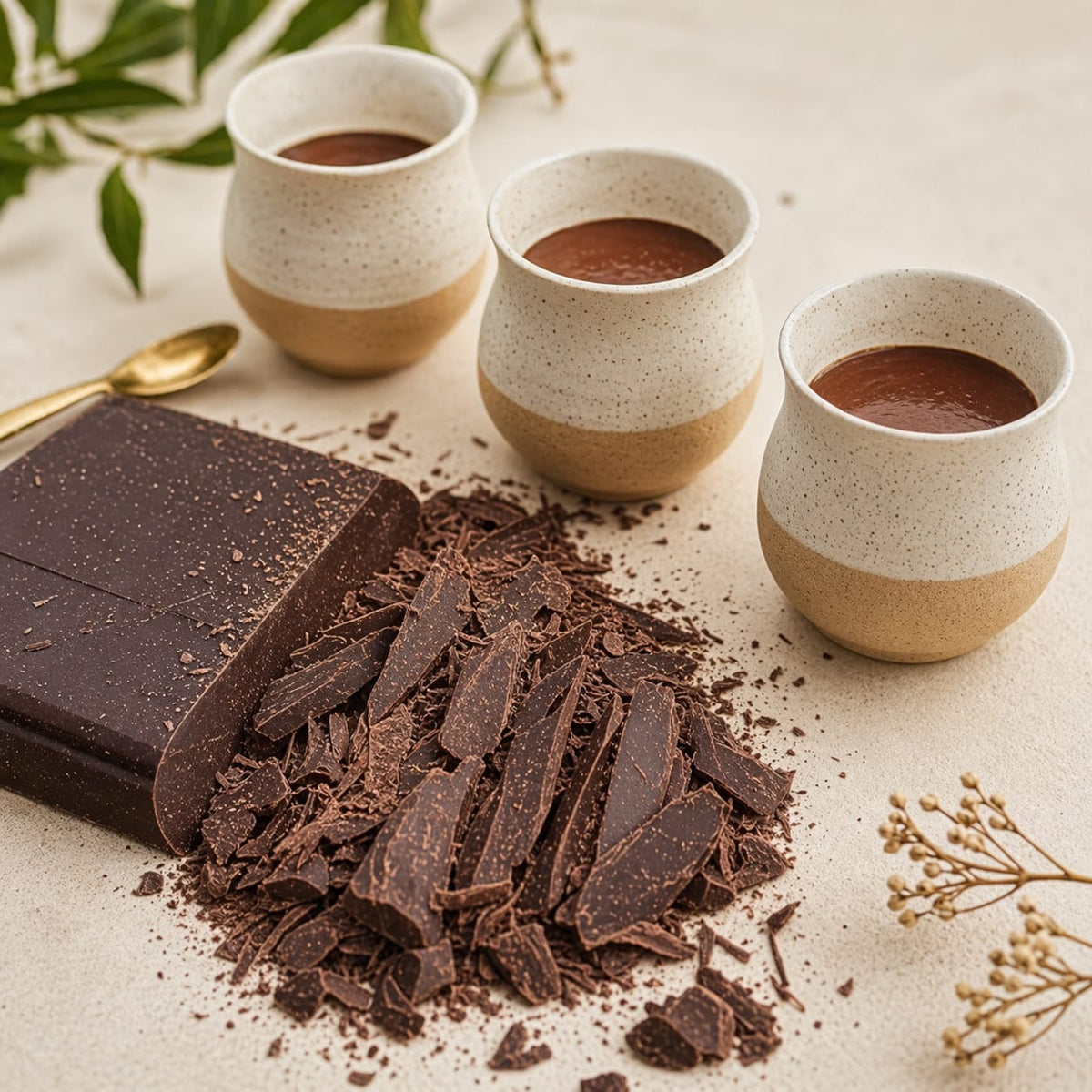
Chop or grate 35–42g of cacao per person. Heat your liquid to around 75°C. Blend together for 30–60 seconds until smooth and frothy. Add a pinch of cayenne and cinnamon if you like — both are traditional and enhance the experience. Pour into cups and carry them to your space with care.
4. Open the Ceremony
Sit together (or alone) with your cups. Take a few slow breaths. You might say a few words of gratitude — for the cacao, for the farmers who grew it, for the tradition that carries it. Then drink slowly and mindfully, feeling the warmth spread through your body.
5. The Heart of the Ceremony (45–60 minutes)
This is your time. You might:
- Sit in silent meditation
- Journal freely — let whatever wants to come, come
- Play gentle music and move your body intuitively
- Share in conversation with others — cacao has a beautiful way of opening people up
- Do breathwork or a simple body scan
There's no right way. Follow what feels natural. Cacao is a gentle plant medicine — it won't force anything, but it creates a warm, open space for whatever needs attention.
6. Close the Ceremony
After 45–60 minutes, bring the group (or yourself) back gently. Take a few grounding breaths. Wiggle your fingers and toes. If in a group, invite a final share — one word or one sentence about what came up. Close with a simple thank you, blow out the candle, and allow time to transition slowly back to the day.
7. Integration
The ceremony doesn't end when you blow out the candle. Take it easy for the rest of the day if you can. Drink plenty of water. Write in your journal. Notice what arises over the following days — insights, emotions, or shifts in perspective often continue to unfold.
Tips for Hosting in Ireland
- Warmth matters — make sure the room is properly heated. A cold space makes it hard to drop in.
- Allow plenty of time — don't schedule anything immediately after. Give yourself at least 2–3 hours in total.
- Keep it small — for a first group ceremony, 3–6 people is ideal. It's intimate enough to feel safe and connected.
- Cacao and alcohol don't mix — ask guests not to drink alcohol the evening before or the day of the ceremony.
- Check for contraindications — ceremonial doses of cacao are not recommended for those on SSRIs or with certain heart conditions. Always check with guests beforehand.
Ready to Begin?
Explore our full Ceremonial Cacao collection and find the cacao that feels right for your ceremony. Each origin comes with tasting notes and guidance to help you choose.
If you're new to cacao, our Amma Ceremonial Cacao Bundle is a beautiful place to start — and our 50g Venezuelan Sample Pack is perfect if you'd like to try before committing to a full block.