Lion's Mane Tincture, Powder or Capsules: What's Different?
Lion's Mane is probably the mushroom I hear mentioned most when people are browsing functional wellness products. The tricky part is that they might be looking at a bottle, a pouch of powder and a capsule blend, all at the same time.
They're not the same product just because they share the name Lion's Mane. Start with the mushroom range and look at the actual ingredient list and format rather than the promises in an advertisement.
Powder is the straightforward option
A plain mushroom powder is something you can weigh and mix into food or a drink where the pack directions allow it. You may notice the mushroom's natural taste and texture. For someone who already makes cacao or smoothies, that can be an easy format to understand.
Check the species name, part of the mushroom used, serving directions and whether it is a whole powder or an extract. Those details make a bigger difference to understanding the product than a dramatic word like ‘supercharged’.
A tincture is a liquid preparation
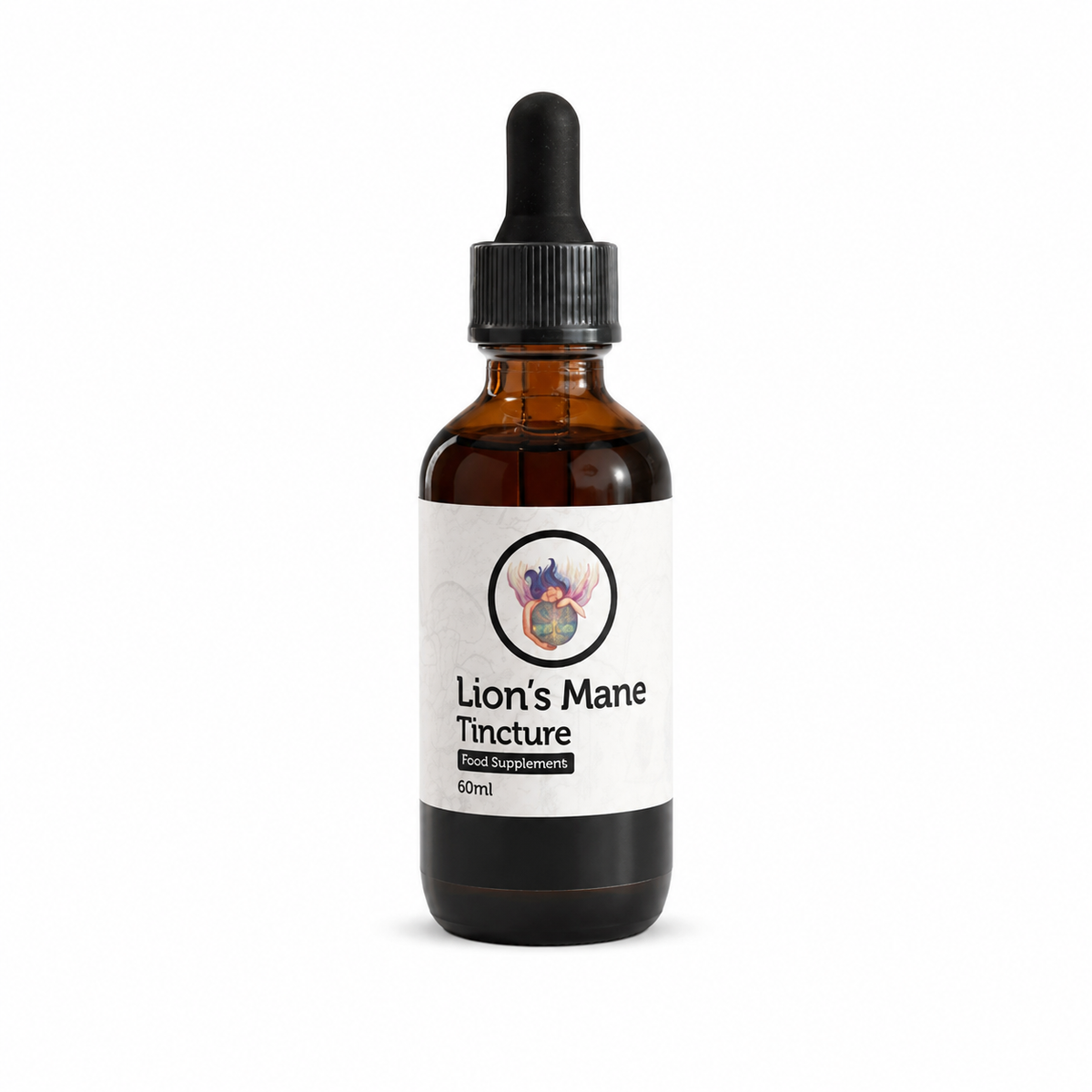
Our Lion's Mane tincture comes in a 60ml bottle. A liquid is convenient for some customers, but it does not automatically mean a stronger or more effective product. You still need to look at the ingredients, how it was prepared and the label directions.
One useful question to ask any seller is what the stated concentration actually refers to. A ratio or percentage should be something they can explain in ordinary language.
Capsules and blends
A capsule can be useful if you prefer a fixed serving and don't want to taste a powder. But check whether it contains only Lion's Mane or several mushrooms together.
The Advanced Mushroom Complex is a four-mushroom blend, not a standalone Lion's Mane product. It includes other species, so the ingredient amounts need to be read for the full serving.
How I would compare two products
Put the labels beside one another. Look at the serving, the species, whether it is a powder or extract, the quantity in the pack and the cost per stated serving. Ask about information that is missing.
Our article on reading a functional mushroom label explains those checks in more detail. We also have a broader guide to mushroom formats if you are still choosing between gummies, tinctures, capsules and powders.
And be careful with products that claim to fix memory, mental health or other medical issues. No format turns a supplement or ingredient into a proven treatment simply because the advertising says so.
The sensible choice is the one you understand, can use according to its instructions and can afford to buy consistently. You can browse the wider functional wellness range here.