Ayurveda and Traditional Chinese Medicine: What We Actually Stock
Ayurveda and traditional Chinese medicine often get thrown together in wellness conversations. I understand why people see links between them, but they're different traditions with different histories and ways of working. We're not here to blend them into a new Mother Earth treatment system.
What we do have are some products with real Indian and Chinese sourcing stories, alongside everyday tea and ritual items. That's the side I can speak about properly.
Amma cacao from India
Our Amma India & Ayurveda collection includes Amma cacao blocks and bars. The guide to the different Amma bars explains what makes the blends distinct. A bar's name, whether it's RELAX, LOVE or FOCUS, doesn't mean we're promising the product will treat stress, mood problems or anything else.
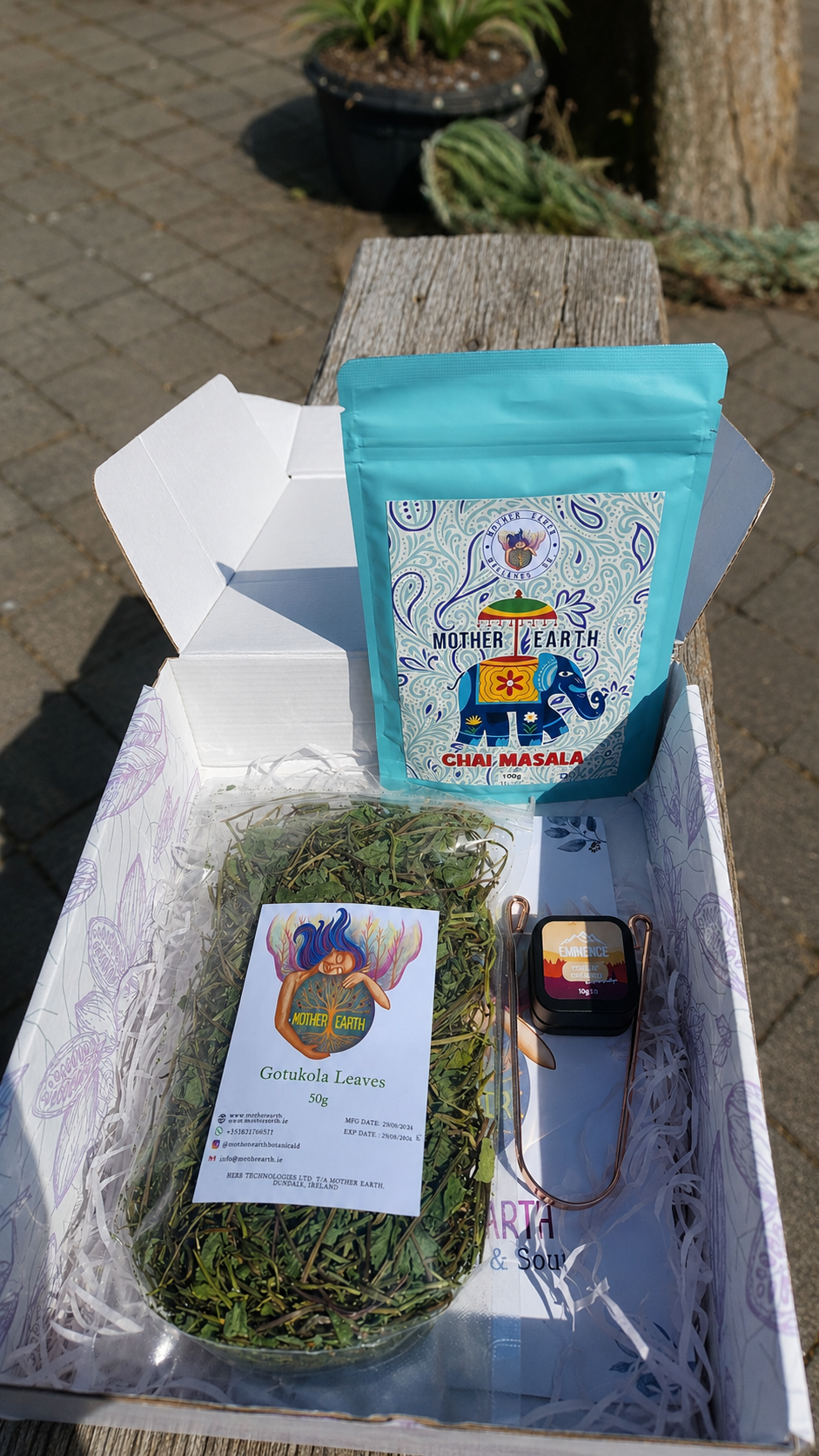
There's also an Ayurvedic tongue scraper in the shop. It's a simple personal-care tool with its own cleaning and use instructions. Our tongue-scraping article looks at it as an everyday routine without making sweeping health claims.
Tea and the family we work with in China
Our matcha and hojicha come through the tea-family relationship we've built in China. These are teas, with different processing and flavours. They aren't the same as prescribing Chinese herbal medicine, and buying them doesn't mean a person is receiving TCM treatment.
If you're simply choosing a drink, read the differences between green tea, matcha and hojicha.
Traditional herbs need proper product information
You'll also come across plant names that have a history in Ayurveda or other traditions. That history doesn't automatically establish that a particular plant or preparation is authorised as a food or supplement in Ireland. Each listing needs to be judged by its own intended use, current label and applicable requirements. I'd never advise a practitioner to prescribe or recommend something medically on the strength of a Mother Earth product description.
If you're an acupuncturist or an Ayurvedic practitioner
We can talk about suitable retail products for a waiting room, staff gifting or personal use, where appropriate. That's separate from clinical tools, professional training and any products intended for therapeutic prescribing. We don't supply acupuncture needles or present ourselves as a TCM college.
Start with the practitioner's guide or the small treatment-space retail page. If you're a shop, Health Shops & Independent Retailers is the better route for buying a suitable range.
I think the sourcing stories are interesting enough as they are. We don't need to invent a treatment claim to make a good cup of tea or cacao worth knowing about.