Ceremonial Cacao: What It Is and How It Differs From Cocoa Powder
Most people first meet cacao through cocoa powder or sweetened hot chocolate, so it is fair to ask what we mean when we sell ceremonial cacao.
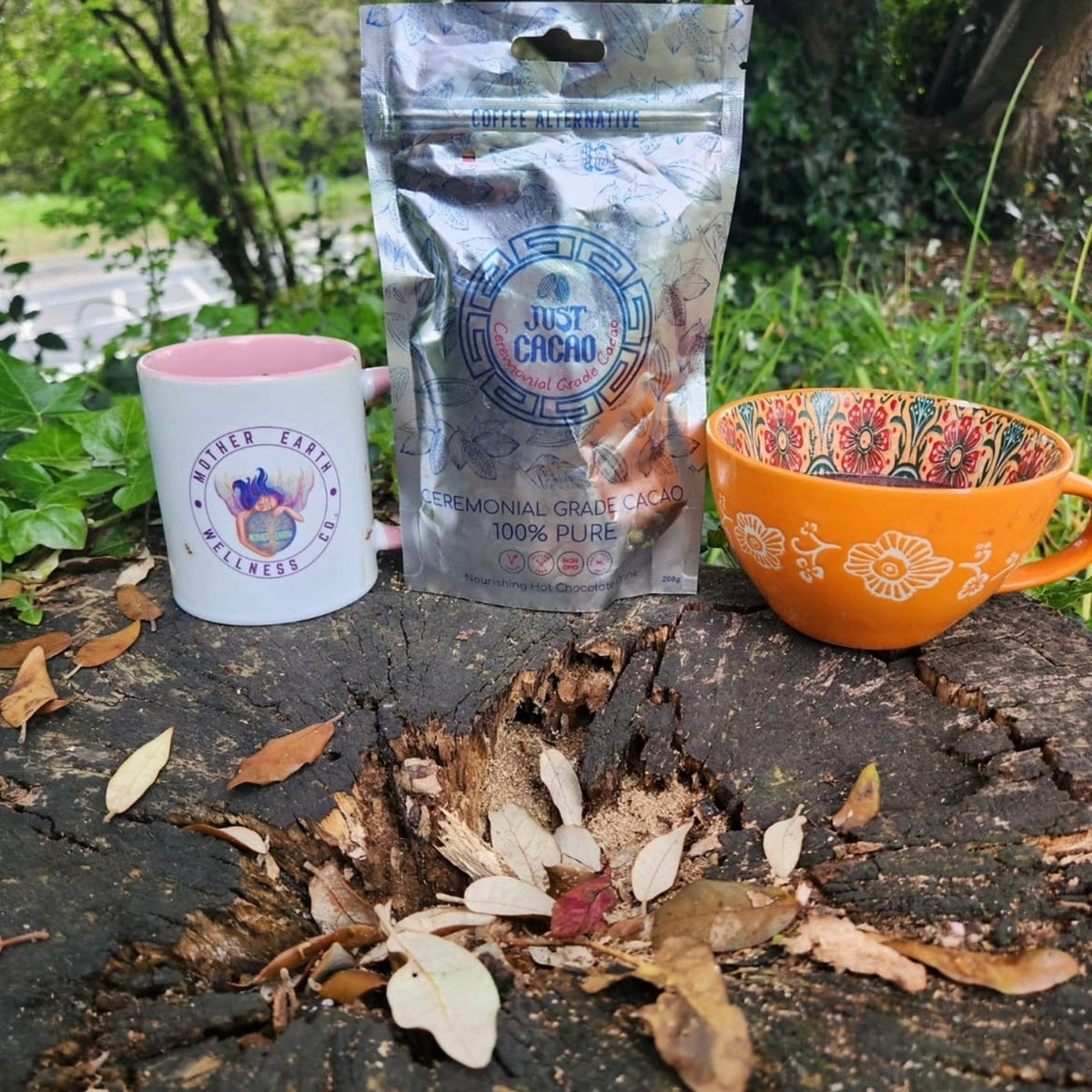
At Mother Earth, the useful difference is simple: our pure ceremonial cacao is whole cacao ground into a paste or block with the naturally occurring cacao butter still present.
Whole cacao vs cocoa powder
Whole cacao contains cacao solids and cacao butter together. Cocoa powder is made differently and normally has much of the cacao butter removed. Drinking chocolate can also contain sugar, milk powder or other ingredients depending on the product.
That changes the texture, richness and way the drink behaves in the cup.
We also have an Ecuadorian Barista Cacao Powder 100g for everyday kitchen use. It’s a different format from our whole ceremonial cacao blocks, so it’s worth choosing based on what you want to make.
What does “ceremonial cacao” mean?
“Ceremonial cacao” is not a protected legal grade with one universal rulebook. We use the term for whole cacao selected for drinking and ritual use, with the origin and source story kept visible.
The label still matters more than the adjective. Check the ingredients, origin, format and preparation information on the product you are buying.
What is naturally in cacao?
Cacao naturally contains theobromine, some caffeine, cocoa solids, cocoa butter and a range of naturally occurring nutrients and plant compounds. The exact amounts vary with origin, processing and serving size.
We do not turn those compounds into promises about mood, sleep, breathing, heart health or what you will feel after one cup.
How much should you use?
For an everyday drink, around 15–25g is a sensible starting range for many adults. Follow the directions on the product you choose and adjust to taste. A larger serving is not automatically a better or more meaningful one.
At home, I usually keep it simple: cacao whisked into hot water or plant milk. Start with a smaller cup and find the strength you enjoy. Here's our straightforward cacao recipe.
Why origin matters
Mother Earth works with cacao from Guatemala, Venezuela, Ecuador and India. Those origins are not interchangeable. They have different flavours, producer relationships and communities behind them.
Even within Guatemala, the choices are different. Keith’s Cacao is a separate brand, while our Guatemalan origins guide covers Entre Nubes, Caoba and Cahabón.
Explore ceremonial cacao by origin or read the Mother Earth source story.
What about ceremony?
Some people use cacao before journalling, meditation, creative work or a facilitated circle. Others simply enjoy it as a warm morning drink. Both are valid.
If you want a practical home version, read our cacao ceremony guide.
If you're new to cacao, I've put a simple recipe, the origins and a few practical tips into our free beginner's cacao guide. It's there to keep or share with someone starting out.